

Spring Mini-Series Part 4
Strawberries & Rhubarb

If you like the crisp edges of lasagne, the soaked croutons, the whipped cream that gets icy around the chocolate scoop - you’re in the right place.
Hello everyone! Today’s the final installment of our spring produce mini-series — the dessert course! Strawberries and rhubarb, plus a plain cake that goes with both.
I’m quite certain that if you’ve decided to cook rhubarb, you’ll pay attention and do it well. So it’s only strawberries that need a few firm words: don’t let their easy deliciousness lull you into a false sense of comfort. They’re unpleasant cooked unless you go to great lengths to extract and reduce their juices. More on that below, now some news.
It’s Cooking School season at Stissing House. In June and July I’ll be teaching two sessions. No clue what the lesson plan is yet, but I promise that you’ll learn something. I’ll do a demo, you’ll cook what I’ve taught, and we’ll eat everything we’ve made together. It’s a tomato and shandy-fueled hoot, and it’s no internet blabber to say how much I’ve enjoyed cooking with some of you in previous classes. Tickets are up on Resy, and all proceeds go to our Pine Plains food pantry, Willow Roots.

STRAWBERRIES
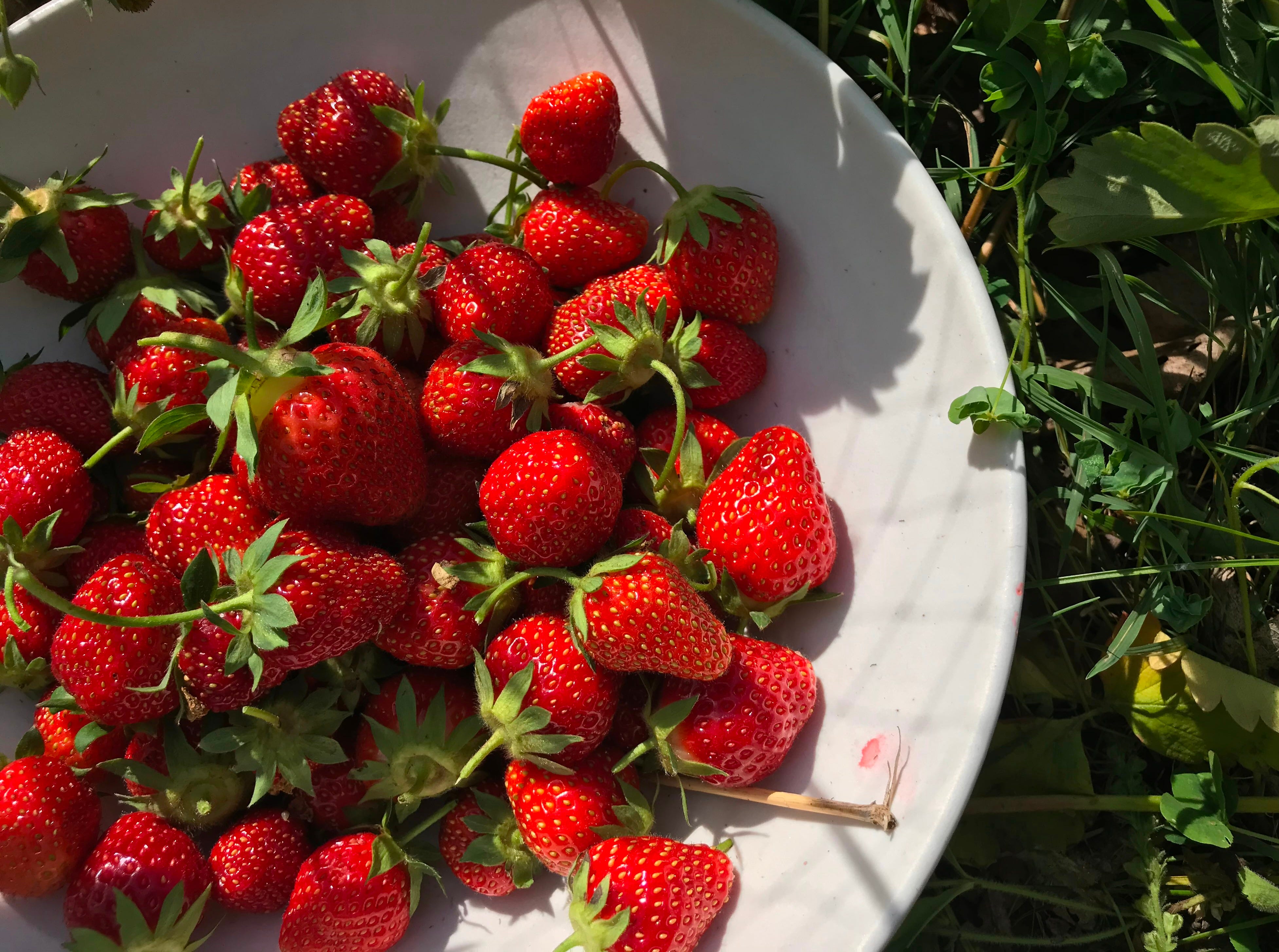
When your strawberries are good, you ought to eat them raw at room temperature. Spare them the fridge, spare them the sugar, just dip them in whipped cream spiked with crème fraîche and eat.
If you’re serving them raw with cake or shortcakes, draw their juices out so they’re ready to wet the cake’s crumb. Hull and half them, and toss them in the tiniest bit of sugar with the tiniest squeeze of lemon juice a few minutes before you spoon them onto plates with cake.
If you’re going to cook your strawberries, contend with their juices or they’ll become flabby, flavorless ghosts. There are two ways to do this. If you’re cooking large quantities of the berries — for jam or for this Strawberry Cobbler — macerate the strawberries overnight to extract their juices. Then strain and reduce the juices to an intense syrup, reunite them with the fruit, and get on with cooking. Rather than breaking down and becoming watery, the strawberries will stay intact and their flavor and color will intensify. Refer to the Cobbler recipe for detailed instructions.
If you just want to incorporate a few strawberries into a baked good, slice the strawberries very thinly and scatter them on top of batter so their juices can evaporate as they bake. They’ll become sticky, rather than limp steamed in the batter. This Strawberry Cornbread uses the technique.
RHUBARB
Rhubarb is a renegade and must be treated as such. It’s wet, stringy, and tart, not something I have any interest in eating unless it’s been guided by a careful cook to its most tender-before-it-collapses point. I use the oven for this. The rhubarb softens slower than it does on the stovetop so you’re more likely to catch it before it falls apart if you check often enough.
Lay batons of rhubarb in a single layer in a baking dish. Sprinkle what seems like an excess of sugar over them, maybe include a few strips of orange peel or an opened vanilla pod, cover tightly with foil and cook at 350 degrees, just until you can squash a baton between your fingers and the dish is filled with ballet-pink sauce. Start checking after 20 minutes.
Poached rhubarb is great on yogurt or with this cake.
PLAIN CAKE
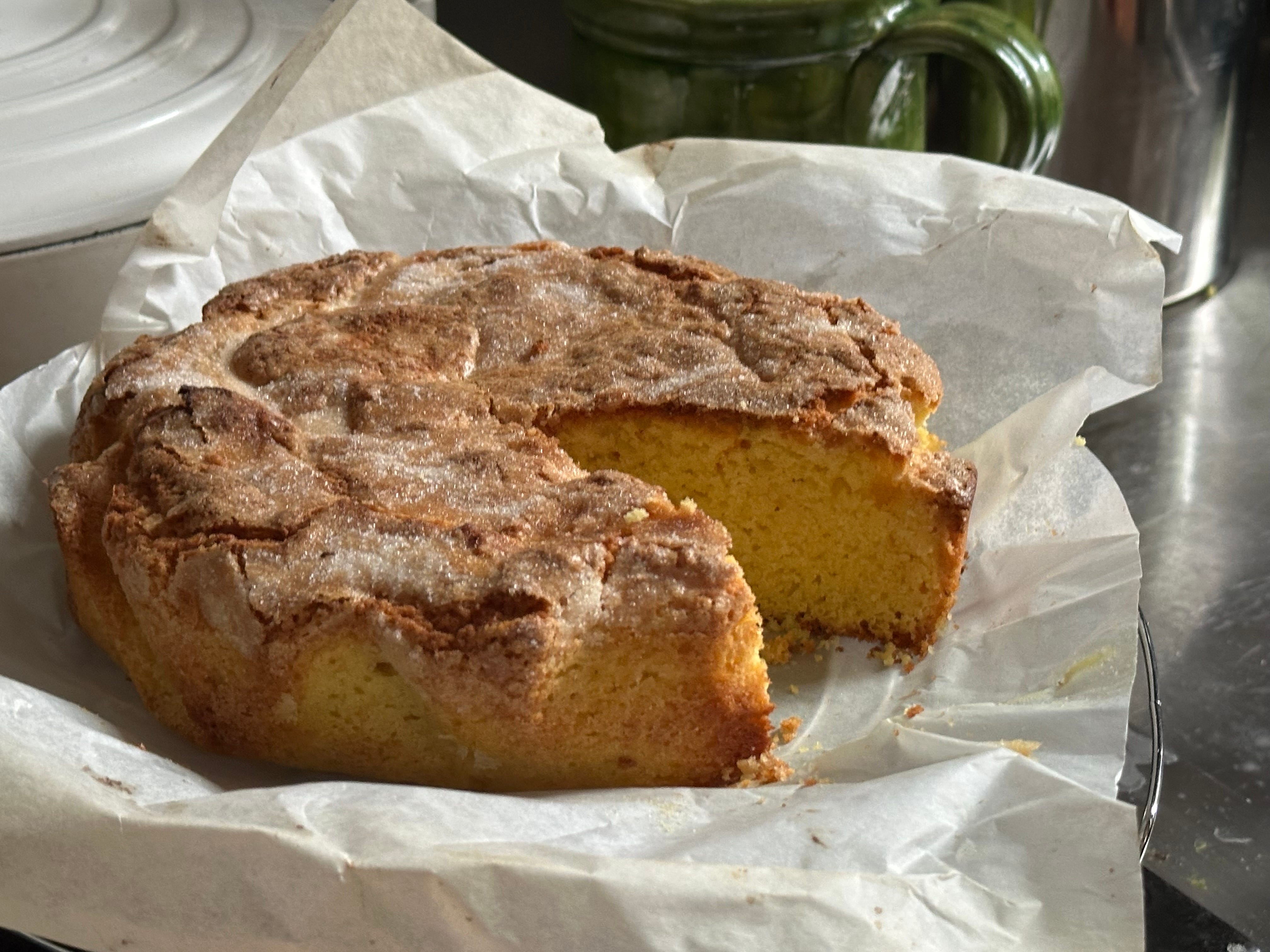
Uncomplicatedly good. It has a dense pound / Madeira cake-style crumb — rich rather than spongy — with a crackled top. It’s good on its own, good with poached rhubarb or strawberries.
17 tablespoons (240 grams) unsalted butter, softened
1 cup (200 grams) plus 2 tablespoons granulated sugar
A lemon
3 large eggs
2 cups (240 grams) all-purpose flour
2 teaspoons baking powder
½ teaspoon kosher salt
Heat the oven to 375 degrees. Line an 8-inch cake tin by pressing an oversized sheet of parchment paper into it.
Cream the butter and 1 cup of the sugar in the bowl of a stand mixer and add the zest of the lemon. Use a spatula to dislodge the butter that gets stuck at the bottom.
Add the eggs one at a time. Scrape down. It’ll split — doesn’t matter.
Measure the dry ingredients directly into the bowl, begin mixing, then squeeze in the juice of the lemon and mix until just combined.
Scoop the (thick) batter into the lined tin. Smooth it over and sprinkle with the 2 tablespoons of sugar. Give the top a few slashes to encourage cracking.
Bake for 20 minutes, then reduce the temperature to 325 degrees and cook until the top is golden and a cake tester comes out clean, about 35–40 minutes more.
Use the sides of the parchment paper to lift the cake from its tin and slice. Eat plain or with strawberries or rhubarb.