

Spring Produce Mini-Series
Part 1: Peas

If you like the crisp edges of lasagne, the soaked croutons, the whipped cream that gets icy around the chocolate scoop - you’re in the right place.
Hello all!
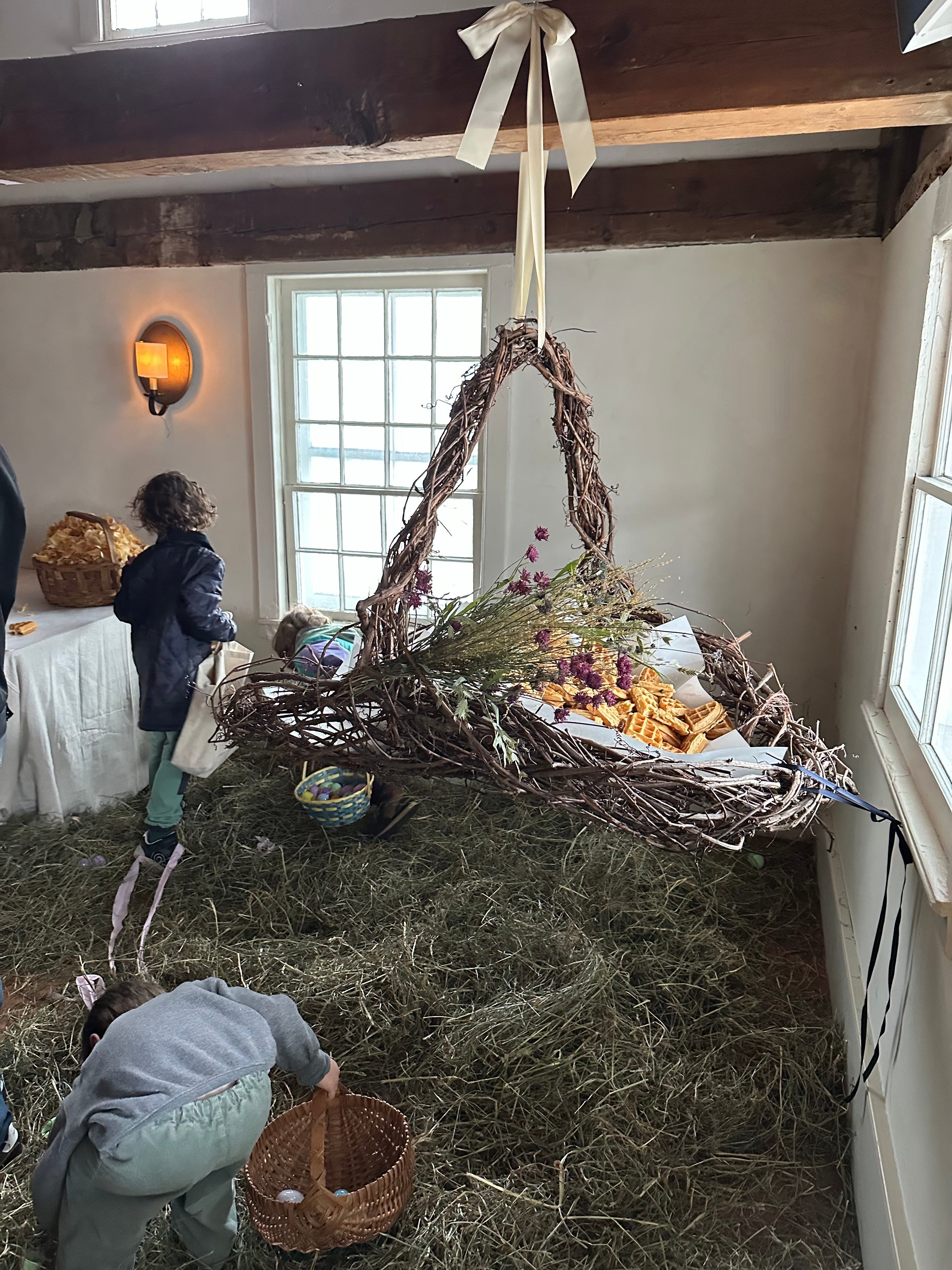
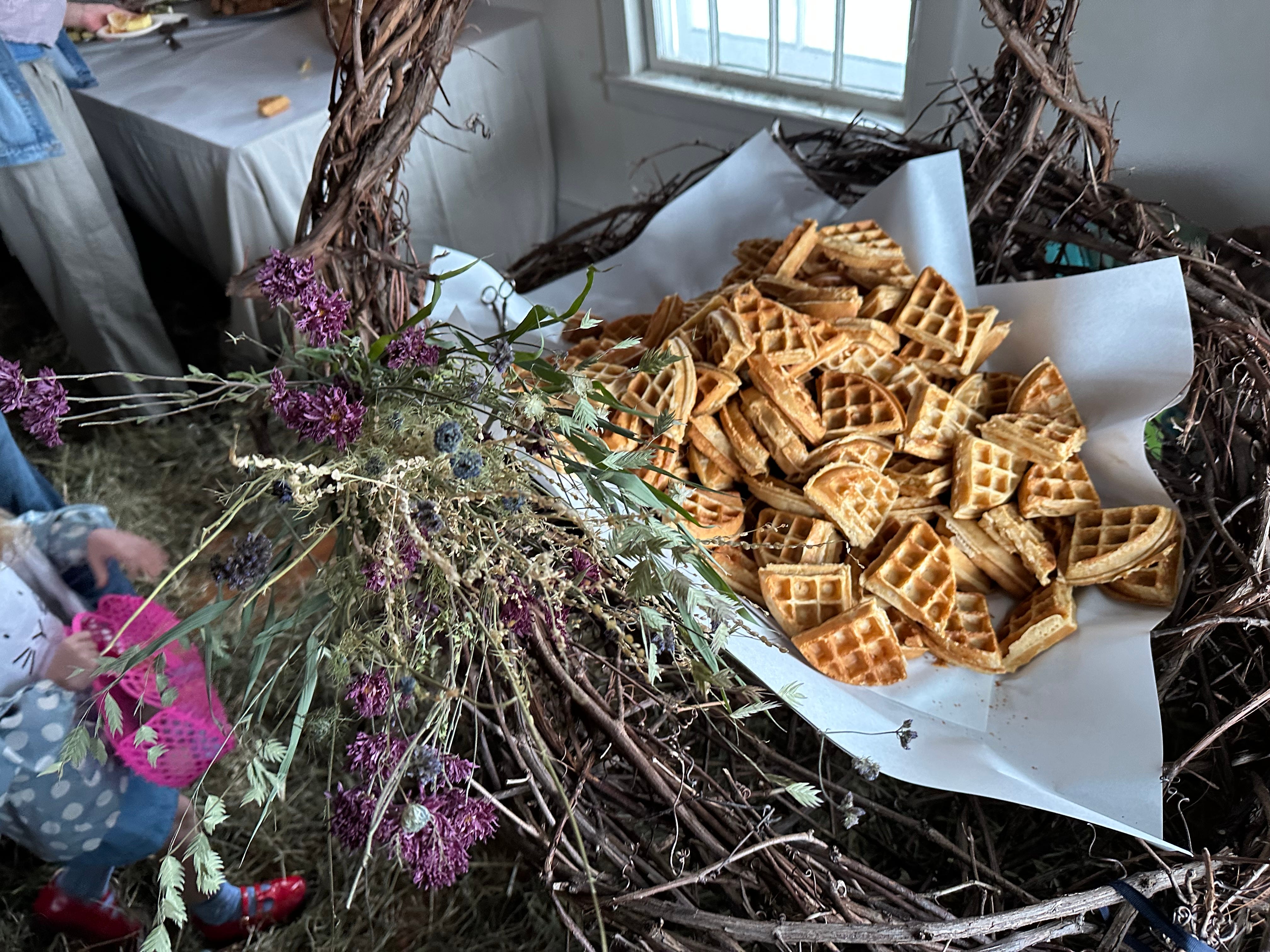
I hope you had a fabulous holiday weekend. Here’s a photo of a hanging basket of waffles at Stissing House’s egg hunt, which filled me with silly delight—I hope it does the same for you.
It seems we can finally set our sights on spring cooking: the ground has thawed, seeds are in, and we’re about a month away from the first little peas and favas here on the East Coast. I’m going to prep you for that in a mini-series on the season’s produce, so you can pounce and cook with abandon the moment it arrives. In a four-part series this month, I’ll dig into peas, favas, ramps, asparagus, rhubarb, and strawberries—all the tender young things that’ll carry us over the threshold to July.
Spring cooking requires a complete mindset shift from winter. For the last five months, our job has been to cook the bejesus out of starchy old roots; now we must do the opposite—do as little as possible to delicate shoots and fruits.
Our effort shifts into preparation: choosing things, not squishing our treasures on the way home, podding, peeling, podding again. To cook well in spring, we’re best served by understanding its ingredients and knowing when to stop. Cook a fava well and you won’t want to bury it in a recipe; boil asparagus properly and all you’ll want is some butter for dipping. In this series, I’m going to share how I choose, prep, and eat the firsts of the season. Let’s get to it with peas.
SPRING PEAS
Spring peas—the kind that you’ll thumb from their pods—ought to be treated like a different species from the frozen kind. They’re less uniform in size and flavor, ranging from ladybug- to peanut-sized; from candy-sweet to vegetal. They’re poppably taut—never having suffered the rupture of their cell walls in freezing—and excellent eaten raw or barely cooked.
My favorite thing to do with them is nothing. I like to eat them on the way home from the farmers market like a bag of M&Ms, or put them in a bowl on the kitchen table for people to do the same. The moment they’re picked, their sugars start turning to starch, which is why they’re incomparably sweet when they’re fresh (and why you should eat them as soon as they’re yours).
You could use them in any recipe that calls for frozen peas, but I tend not to. You need to buy and pod such a volume to equal a bagful (a pound of pods gives you about a cup of peas). I prefer to use them sparingly and show them off.
How to choose your peas:
It’s usually a case of stuffing handfuls of pods into a bag rather than selecting individual ones, but avoid any that look dry, have white patches, or bloated areas. Their peas will be woolly and less sweet than greener, more evenly sized ones.
How to prep them:
Communally, outdoors. Hold a pod in one hand and pierce its seam with the thumb of the other. Run your thumb down the inside, pushing the peas into a bowl. If the peas are especially young, they won’t all line up on one side when you open the pod, so run your thumb down both sides. Save the pods to infuse stock (especially if you’re making Risi e Bisi Orzo or pea soup).
How to use them raw:
Raw peas belong in any spring salad with salty cheese, or alongside prosciutto or salami for a snack. If you’re putting them in a salad, dress them first before you layer them with other ingredients: season them in a bowl with salt, lemon juice, and olive oil. Roll them around and taste to get the seasoning right before tossing through leaves or anything else.
How to cook them:
Cook spring peas in unsalted water at a rollicking boil. After a minute or two, when they start to surface, taste a couple of the larger ones. There is a moment—I can’t tell you exactly when—that they go from tasting good to particularly good, possibly sweeter than when they were raw. Keep eating until you taste that transition, then add a handful of mint leaves, count to ten, and drain. Dress the peas immediately with plenty of olive oil or butter and flaky salt, so they take on the fat and don’t shrivel too much. Roll them around so they’re all coated. Eat a bowl plain, or spoon onto a plate with fish, chicken, pork, or lamb.
A few ideas for your peas…
Raw pea and gem cups
Click the leaves off a few heads of baby gem and lay them on a platter. Sliver a few handfuls of snap peas and put them in a bowl with your raw, podded peas. Dress with lots of lemon juice, salt, and olive oil. Tear mint leaves into the bowl and stir; taste for seasoning. Spoon the raw peas and snaps into the gem cups. Grate over lots of ricotta salata and grind over some black pepper. Drizzle over more olive oil. Pick up the pea-filled lettuces and eat like tacos.
Pea tabbouleh
Boil your spring peas as above and drizzle with lots of olive oil. Let them cool. Chop lots (and lots) of Italian parsley and mint and add to the peas. Squeeze in lemon juice, stir, and adjust with salt and more lemon. Eat with a spoon.
A side of minty potatoes and peas
Bring fingerlings up to a simmer from cold in salted water. After 15 minutes, poke one with a fork to check it’s cooked. When the fingerlings are crushable, add the peas to the water. When they rise, taste, and add a handful of mint leaves when the peas are sweet. Count to ten and drain. Use a whisk or a potato masher to break the potatoes and some of the peas. Drizzle with lots of olive oil and toss. Finish with lemon zest and black pepper, and eat. Especially good with fish.
A meal of baked potato with peas and bacon bits
Bake a potato. Snip up rashers of bacon and fry to lardons. Tear the potato open using two forks, and butter and salt both sides. Boil your peas and spoon them into the potato; sprinkle with the crispy bacon. This is very good with pea shoots (dressed with lemon juice and olive oil) on top.
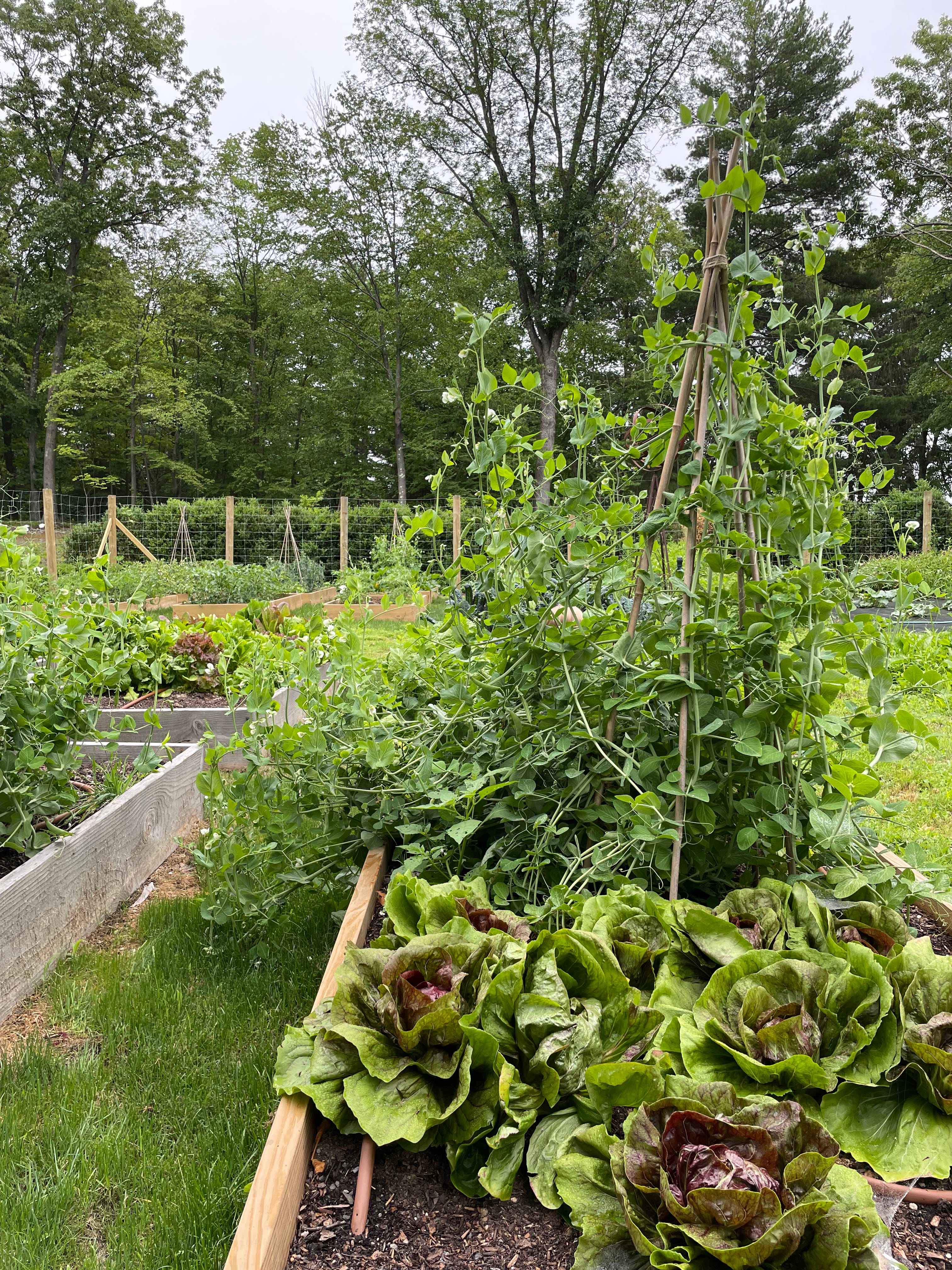
The garden photo has me dizzyingly excited for my garden this summer